 English
  فارسی
فارسی  عربي
عربي 
Description
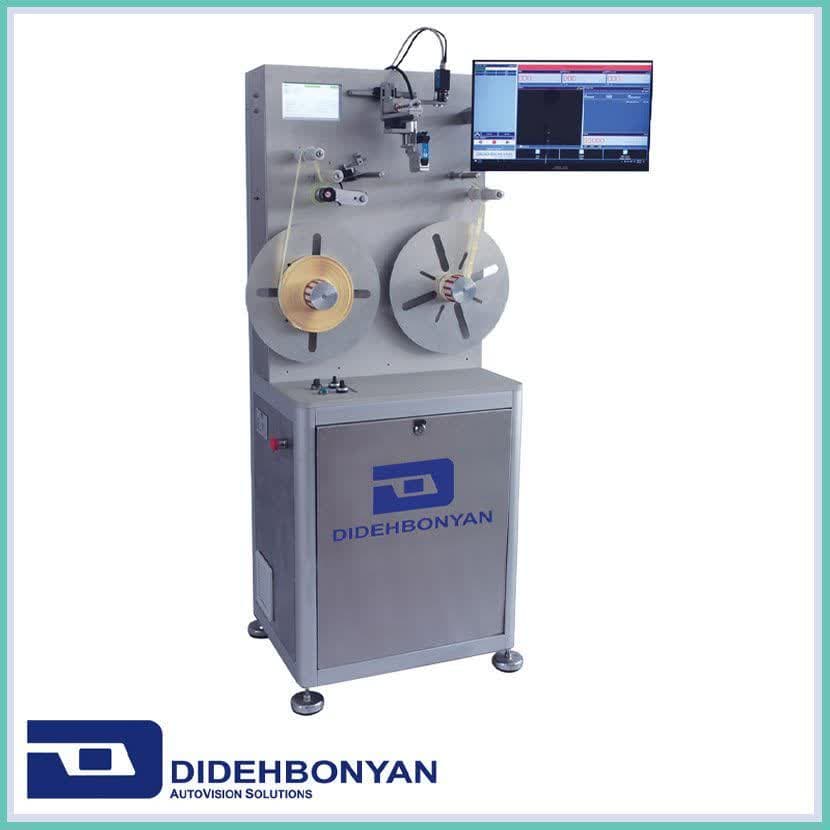
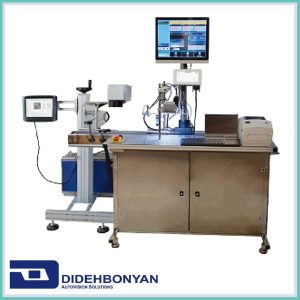
The roll-to-roll machine with an inkjet printer is a widely used device in the printing and packaging industries. It is designed to print variable information (such as production date, expiration date, serial numbers, barcodes, logos, etc.) on various materials like paper, plastic films, labels, and aluminum foils. This machine enables fast, high-quality, and cost-effective printing.
Main Components of the Roll-to-Roll Machine with Inkjet Printer
- Roll Unwinder
This part unwinds the roll and feeds the material to the printing section. Proper
tension adjustment is critical to avoid tearing or wrinkling of the material.
- Inkjet Printer (Industrial Printer)
The inkjet printer is responsible for printing information onto the moving material. These printers typically use the following technologies:
– Thermal Inkjet (TIJ): For high-resolution printing.
– Continuous Inkjet (CIJ): Suitable for high-speed printing in large-scale industries.
– DOD (Drop on Demand): Printing on demand.
- Roll Rewinder
After the printing operation, the printed material is neatly collected onto a new roll for further use.
- Speed and Adjustment Controller
This section adjusts the speed of the roll movement and synchronizes it with the printer’s printing speed. It also allows precise alignment of the printing (e.g., distance, angle, etc.).
- Control Panel or User Interface
The control panel enables operators to manage the machine, configure printing settings, and monitor its status.
- Sensor System
The sensor system monitors the roll movement and ensures that the printing occurs at the correct position, avoiding errors.
—
Advantages and Applications of the Roll-
to-Roll Machine with Inkjet Printer
- Advantages:
– High Speed: Allows for fast printing on long rolls.
– High Precision and Quality: Capable of printing high-quality information on various surfaces.
– Versatility: Suitable for printing on a wide range of materials (paper, plastic films, foil, etc.).
– Time and Cost Efficiency: Eliminates the need for manual or slower printing methods.
– Variable Data Printing: Ideal for serial numbers and unique barcodes.
- Applications:
– Food industry (printing production and expiration dates on packaging).
– Pharmaceutical industry (printing serial
numbers or product information on labels).
– Cosmetics and personal care products.
– Printing on packaging films.
– Barcode and QR code printing.
—
How the Roll-to-Roll Machine with Inkjet Printer Works
- Loading the Raw Roll: The roll containing the raw material (e.g., labels or plastic film) is mounted on the machine.
- Adjusting Speed and Tension: The speed of the roll movement and its tension are adjusted according to the material type.
- Configuring the Inkjet Printer: The required information (such as text, barcode, or logo) is designed and configured in the inkjet printer software.
- Starting the Printing Process: The material is unwound and moved toward the inkjet printer, which prints the information with high precision.
- Collecting the Printed Roll: The printed material is neatly rewound onto a new roll for further use.
—
Key Tips for Optimal Operation
- Choosing the Right Inkjet Printer: The type of inkjet printer must be selected based on the printing requirements (quality, speed, and material type).
- Regular Maintenance: Cleaning the printer head and inspecting the machine components increase its lifespan.
- Proper Tension Adjustment: Prevents tearing or wrinkling of the material.
- High-Quality Raw Materials: Using high-quality rolls prevents printing issues.
- Machine Calibration: Precise speed and alignment adjustments help avoid errors.
—
10 Frequently Asked Questions About the Roll-to-Roll Machine with Inkjet Printer
- Can this machine print on all types of materials?
Yes, provided the appropriate inkjet printer and ink are chosen for the material (paper, plastic, foil, etc.).
- What is the printing speed of this machine?
The printing speed varies depending on the machine and material but typically reaches several hundred meters per
minute.
- What is the maximum roll width that can be used?
This depends on the machine model but is usually between 20 and 100 cm.
- Can it print variable data?
Yes, these machines can print variable data such as serial numbers and unique barcodes.
- What type of ink should be used?
Various inks (such as water-based, solvent-based, or UV inks) can be used depending on the material and printing needs.
- Does it require a skilled operator?
No, but basic familiarity with the machine and inkjet printer software is
essential for setup.
- Does the machine require special maintenance?
Yes, regular cleaning of the printer head, checking mechanical components, and replacing ink are necessary.
- Can it print on transparent materials?
Yes, but it requires special ink and proper settings.
- Does the machine connect to a computer?
Yes, most machines connect to software on a computer for designing and managing the printing process.
- How much does this machine cost?
The cost varies depending on the model, brand, and features, typically ranging from
several thousand to tens of thousands of dollars.
Reviews
There are no reviews yet.