 English
  فارسی
فارسی  عربي
عربي 
Description
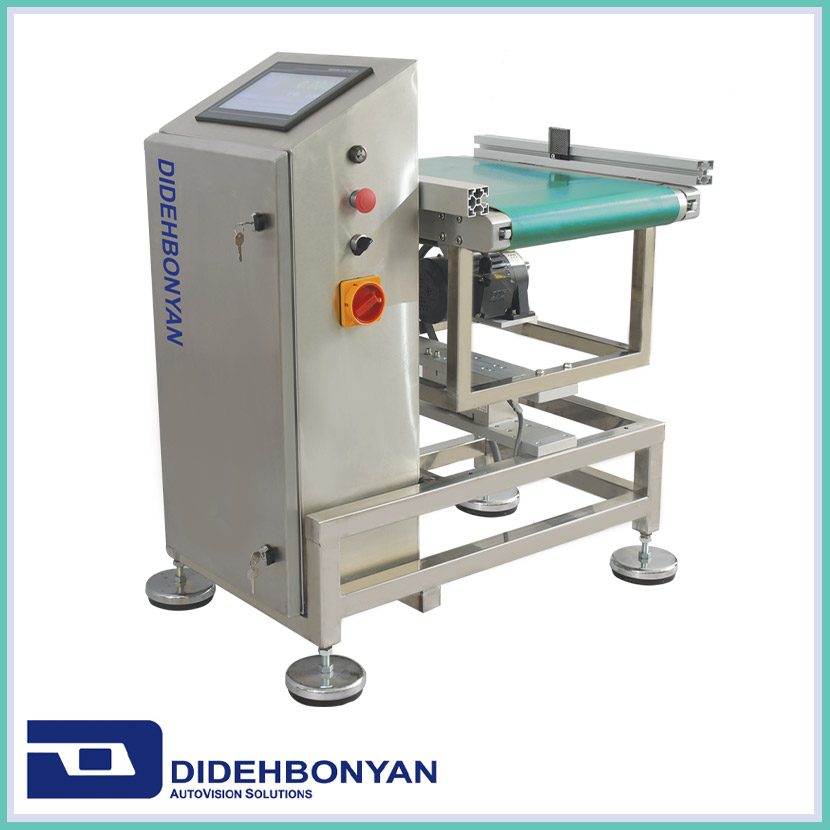
Checkweigher Machine: Introduction, Technical Specifications, and Applications
Introduction
In industrial and manufacturing processes, product quality control is a fundamental principle that enhances customer trust, reduces waste, and ensures compliance with global standards. One of the key tools in this field is the Checkweigher Machine. These machines are responsible for controlling the weight of products while they move along production lines, providing high accuracy to verify the weight of each product. This article introduces the checkweigher machine, its technical specifications, functionality, benefits, and applications.
—
Technical Specifications of the Checkweigher Machine
The checkweigher machine introduced here has outstanding features and technical specifications, making it an ideal choice for various industries. Below are its key specifications:
- Maximum Weight Capacity: Can measure weights up to 25,000 grams.
- Resolution: Measurement precision up to 1 gram.
- Dynamic Accuracy: Capable of detecting weight deviations with an accuracy of up to 10 grams.
- Line Speed: Can inspect up to 60 products per minute.
- In-Line Weighing: Measures product weight during the production process.
- Weight and Quantity Inspection:
– Accurate weight inspection of moving products.
– Counting the number of items inside a carton.
- Integration with Existing Production Lines: Can be easily installed on various types of production lines.
- Load Cell from HBM Germany: Equipped with high-quality load cells for precise measurement.
- 10-Inch Touchscreen Display: Easy-to-use interface for operators.
- Rejector and Alarm System: Automatically removes products outside the predefined weight range or triggers alarms.
- Different Models: Available in two standard configurations:
– Conveyor movement from left to right.
– Conveyor movement from right to left.
- Advanced Reporting Capabilities:
– Provides total weight reports.
– Generates average weight reports for production batches.
- Hygienic Design and GMP Compliance: The machine’s body is designed to meet the hygiene requirements of sensitive industries such as pharmaceuticals and food production.
- Technical Documentation and Validation: Includes technical documentation and validation processes (OQ, DQ, IQ) to comply with international standards.
- Detachable and Washable Conveyor Belts: Easy cleaning of the machine to maintain hygiene and prevent contamination.
—
How Does a Checkweigher Work?
The checkweigher machine uses advanced load cells and control systems to measure the weight of products as they move on a conveyor belt. The operation process of the machine can be summarized in the following steps:
- Product Entry: The product enters the checkweigher conveyor from the production line.
- Weight Measurement: The machine’s load cell measures the product’s weight accurately and in real-time.
- Comparison with Predefined Limits: The measured weight is compared with the predefined acceptable weight range.
- Identification of Non-Compliant Products: If the product’s weight falls outside the defined range, the machine
identifies it as non-compliant.
- Reject or Alarm: Non-compliant products are automatically removed by the rejector system, or an appropriate alarm is triggered.
This process is entirely automated and does not require operator intervention, minimizing the likelihood of human error.
—
Applications of Checkweigher Machines
Checkweigher machines have extensive applications across various industries. Some of these applications include:
- Food Industry:
– Controlling the weight of packaged food products such as snacks, beverages, or
meat products.
– Ensuring that product weights match the standards printed on the packaging.
- Pharmaceutical Industry:
– Inspecting the weight of tablets, capsules, or liquid medicines.
– Fully complying with GMP standards and preventing the production of non-compliant products.
- Chemical Industry:
– Controlling the weight of packaged chemicals.
– Preventing risks associated with distributing chemicals outside standard weight limits.
- Cosmetic and Personal Care Industry:
– Inspecting the weight of cosmetic products such as creams, lotions, or
shampoos.
– Ensuring compliance with product labeling specifications.
- Packaging and Logistics:
– Counting and controlling the number of products inside cartons.
– Providing reports on total weight and average weight of packages.
—
Advantages of Checkweigher Machines
Using a checkweigher machine offers numerous benefits for manufacturers. The most significant advantages include:
- Enhanced Accuracy and Quality: Checkweighers ensure high accuracy in product weight inspection, preventing the
production of non-compliant items.
- Reduced Waste: Rapid identification of defective products reduces waste and production costs.
- Compliance with Standards: These machines help manufacturers adhere to national and international weight regulations.
- Increased Production Speed: With the ability to inspect up to 60 products per minute, checkweighers enhance production line efficiency.
- Comprehensive Reporting: Detailed weight reports enable manufacturers to optimize production processes.
- Ease of Installation and Use: A user-friendly design and compatibility with various production lines make the machine easy to install and operate.
- Hygiene and Safety: The detachable and washable conveyor belts ensure hygiene
and safety in production lines.
—
Standards and Hygienic Design
The checkweigher introduced here is designed in compliance with GMP (Good Manufacturing Practice) standards. These standards include hygiene and safety requirements for producing products in industries such as pharmaceuticals and food. The machine’s body is made from durable and hygienic materials, preventing contamination and simplifying cleaning processes. Additionally, the availability of technical documentation and validation processes (OQ, DQ, IQ) ensures that the machine meets international quality and standard requirements.
—
Design and Flexibility
One of the standout features of this checkweigher machine is its flexible design. It can be used on various production lines, whether the conveyor moves from left to right or right to left. The 10-inch touchscreen display simplifies the operation process for operators, making it easy to configure and monitor the machine.
—
Conclusion
The checkweigher machine is a vital component of modern production lines, ensuring high accuracy and speed in product weight control while preventing
the production of non-compliant items. Its advanced technical specifications, hygienic design, and comprehensive reporting capabilities make it an ideal choice for various industries, including food, pharmaceuticals, chemicals, and packaging.
Investing in a checkweigher machine can significantly improve product quality, reduce costs, and enhance the overall efficiency of production lines. This machine is not just a tool for quality control but a critical asset for any manufacturer aiming to meet global standards and satisfy customer demands.
Reviews
There are no reviews yet.